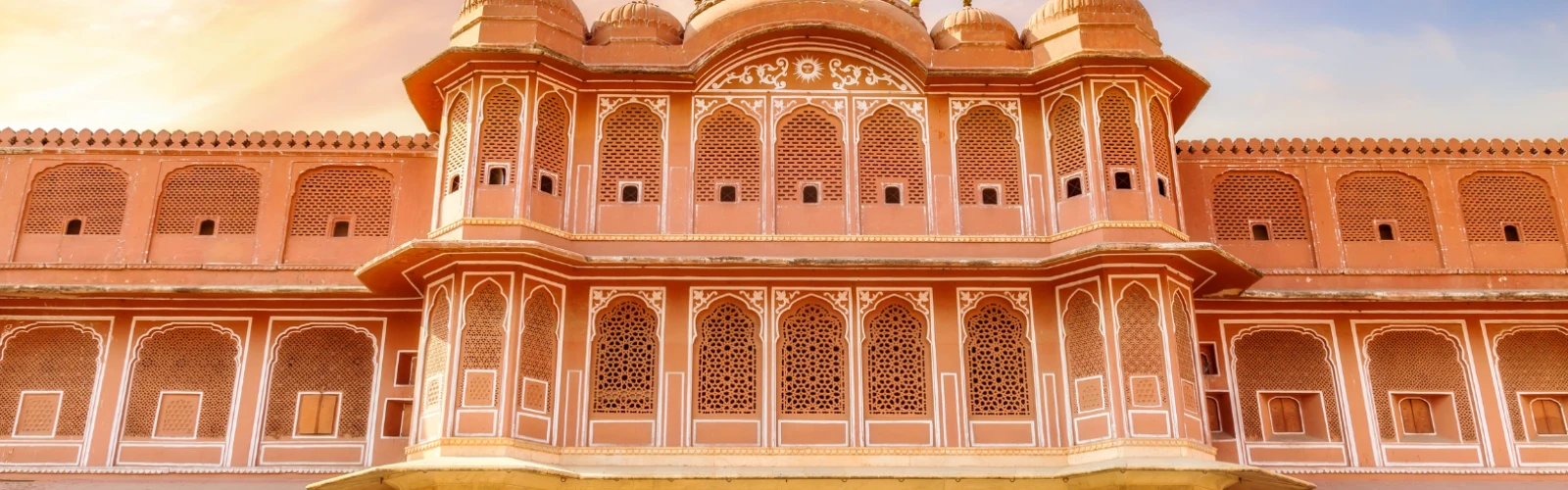
City Palace Jaipur: A Glimpse into Royal Grandeur and Regal Architecture

Introduction: City Palace Jaipur – The Heart of Royal Rajasthan
Nestled in the heart of the Pink City, City Palace Jaipur stands as a living symbol of Rajasthan’s royal legacy and timeless architecture. Built in the early 18th century by Maharaja Sawai Jai Singh II, the palace complex perfectly captures the grandeur of Rajput and Mughal styles, blending intricate artistry with majestic design.
The City Palace isn't just a monument — it’s an experience of royalty. From grand courtyards to ornamental gateways and royal museums, every corner tells a story of opulence, bravery, and cultural sophistication. This magnificent complex continues to be the residence of Jaipur’s royal family, preserving centuries-old traditions amid modern-day Jaipur.
A visit to the City Palace transports you to a time of royal processions, jeweled robes, and golden thrones — offering an intimate glimpse into Rajasthan’s regal past and artistic heritage.
A Glorious History: From Maharaja Sawai Jai Singh II to Modern Royalty
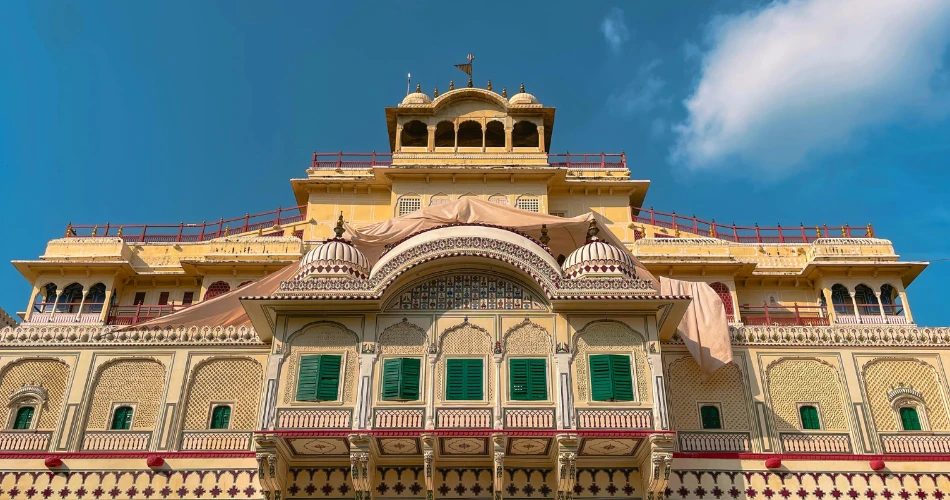
The City Palace was commissioned soon after Jaipur’s foundation in 1727 by Maharaja Sawai Jai Singh II. Designed under the guidance of Bengali architect Vidyadhar Bhattacharya, the palace became a masterpiece of urban planning that followed the principles of Vastu Shastra and Shilpa Shastra.
Throughout history, City Palace has been the epicenter of royal administration, celebrations, and governance. The rulers of Jaipur continued to expand the palace complex over centuries, adding new courtyards, halls, and temples that reflect the evolving tastes and influences of their eras.
Today, part of the City Palace remains the private residence of the royal family, while the other sections have been converted into museums and galleries, preserving a vast collection of royal costumes, armory, manuscripts, and artifacts. The palace remains a symbol of Jaipur’s continuity — from regal past to cultural present.
Architectural Brilliance: A Fusion of Rajput and Mughal Styles
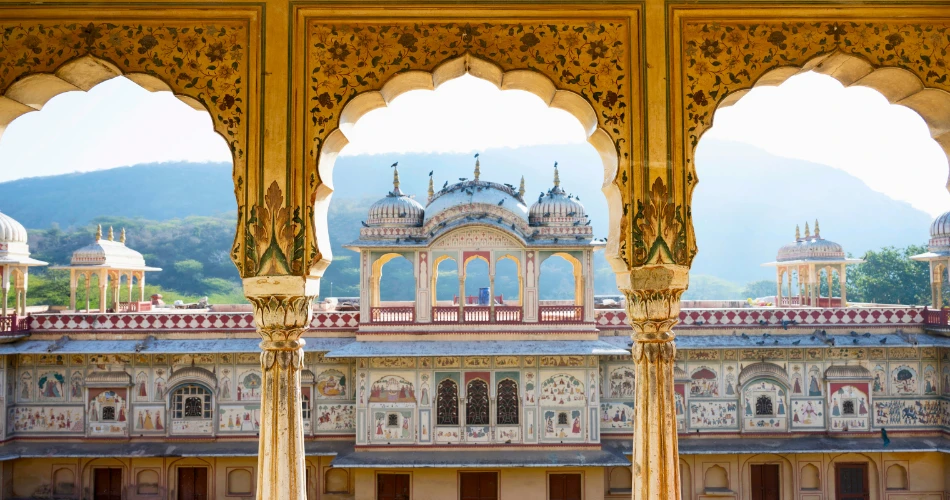
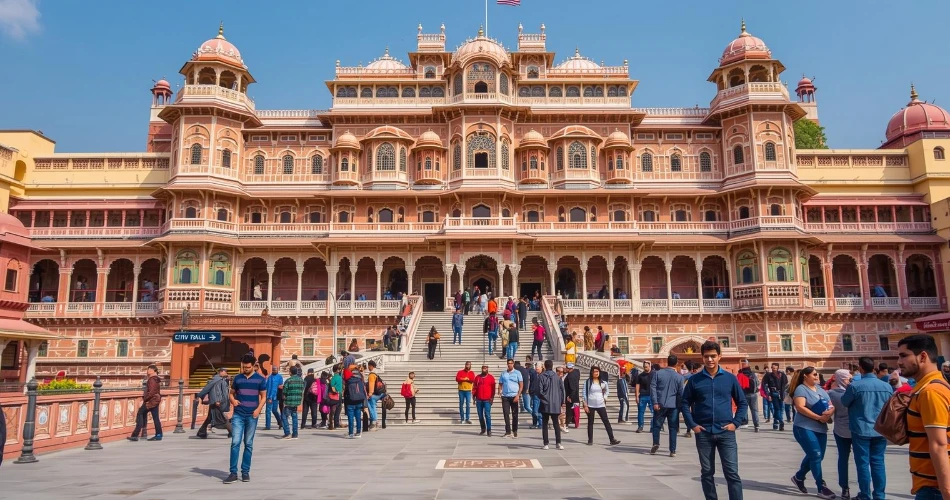
What makes the City Palace Jaipur truly remarkable is its architectural finesse. The complex is a blend of Mughal symmetry and Rajput artistry, showcasing the perfect fusion of strength and elegance. Built primarily with pink and red sandstone, it reflects Jaipur’s famous title — “The Pink City.”
The palace layout includes vast courtyards, arcaded pavilions, marble gateways, and beautifully decorated halls. Domes, jharokhas (overhanging balconies), and chhatris (elevated domed pavilions) adorn the skyline, creating a visual symphony of form and balance.
Every element — from the ornate frescoes to the intricate latticework (jali) — showcases unmatched craftsmanship. The delicate detailing inside the palace halls stands as proof of the artistic excellence of Rajasthani artisans and the royal passion for aesthetics and symmetry.
Exploring the Courtyards, Museums, and Royal Galleries of City Palace
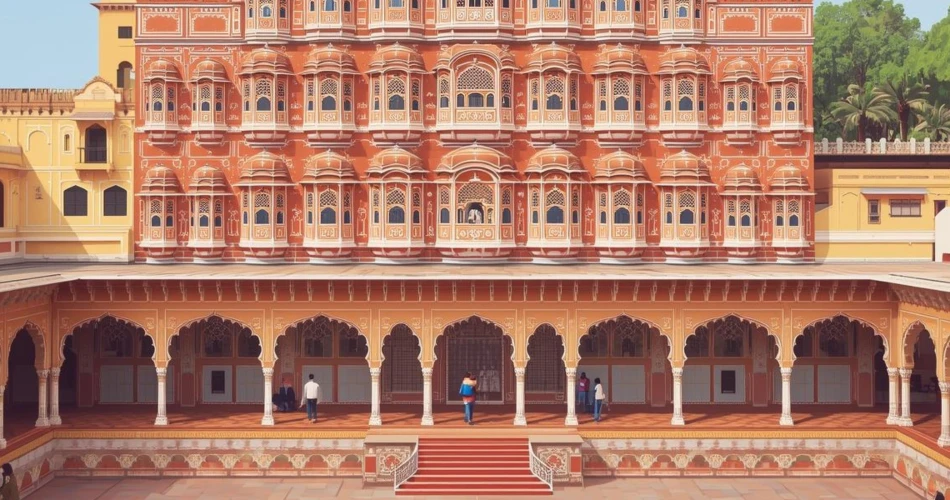
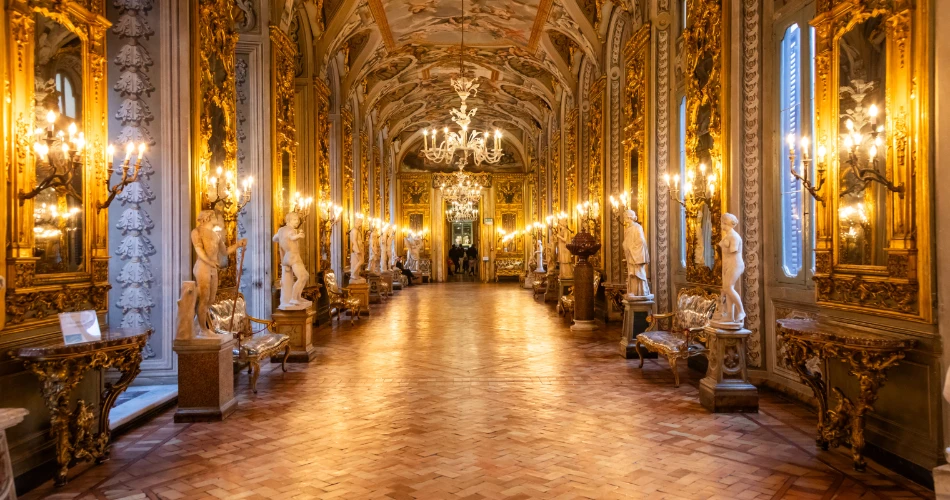
The City Palace complex is a treasure chest of experiences. Visitors can explore its grand courtyards, such as Mubarak Mahal, Chandra Mahal, and Pritam Niwas Chowk, each with unique artistic and cultural significance.
The Mubarak Mahal, built in the late 19th century, now serves as a museum displaying royal costumes, textiles, and ceremonial attire. The Chandra Mahal, still inhabited by the royal family, has parts open to the public showcasing exquisite paintings, mirror work, and floral decorations.
The Sileh Khana (Armory) displays weapons used by Jaipur’s rulers — from swords and daggers to guns embellished with gold and silver. Meanwhile, the Diwan-i-Khas (Hall of Private Audience) and Diwan-i-Aam (Hall of Public Audience) reflect the political and ceremonial life of the royals.
Each space within the palace tells a tale of luxury, courage, and cultural grandeur — making every step inside a walk through living history.
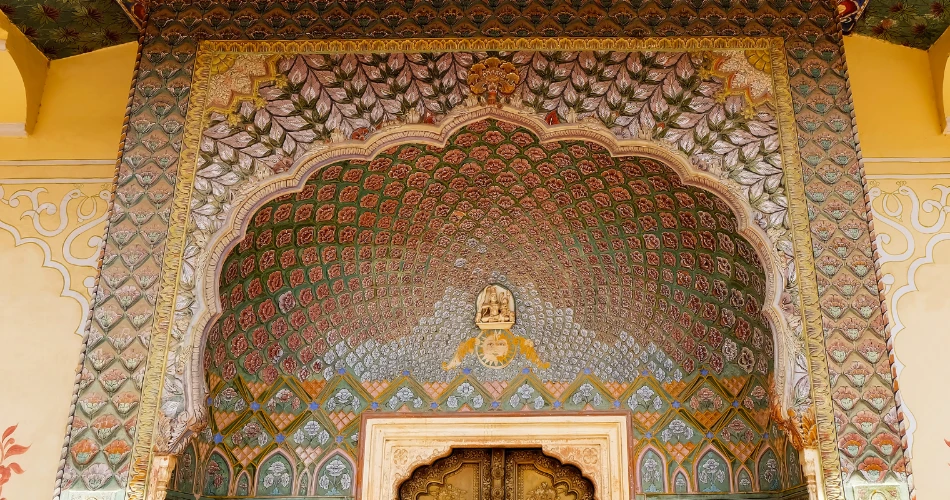
The Pritam Niwas Chowk: The Four Season Gates of Symbolism
One of the most Instagram-worthy and spiritually significant parts of City Palace Jaipur is Pritam Niwas Chowk — a courtyard with four richly decorated gates, each representing a different season and Hindu deity.
-
Peacock Gate (Autumn) – dedicated to Lord Vishnu.
-
Lotus Gate (Summer) – representing Lord Shiva-Parvati.
-
Rose Gate (Winter) – for Goddess Devi.
-
Leheriya Gate (Spring) – symbolizing Lord Ganesha.
Each gate is adorned with hand-painted motifs, intricate floral designs, and symbolic details that embody Jaipur’s devotion to art and spirituality. These gates aren’t just decorative — they symbolize the eternal cycle of seasons and divine harmony, reflecting how the palace intertwines beauty with meaning.
Pritam Niwas Chowk stands as a timeless reminder of artistic storytelling through architecture, making it a must-visit for every traveler and photographer.
Living Heritage: The Royal Family and Their Cultural Legacy
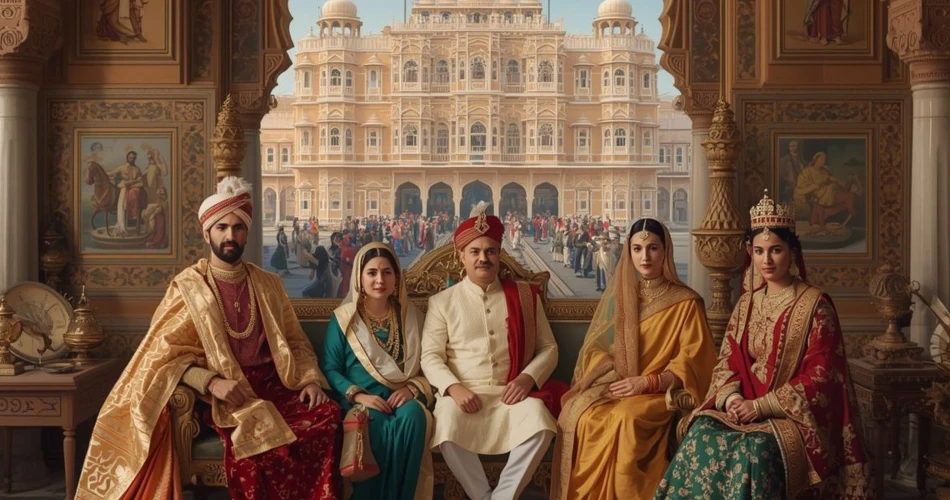
Unlike many historical monuments, City Palace is not frozen in the past. The royal family of Jaipur still resides in the Chandra Mahal, maintaining centuries-old traditions and ceremonies.
The current head of the royal family, Maharaja Padmanabh Singh, has gained global recognition for his efforts to preserve the palace and promote Jaipur’s cultural tourism. The palace often hosts royal events, traditional festivals, and art exhibitions that celebrate Rajasthan’s vibrant heritage.
This ongoing connection between royalty and modernity makes the City Palace truly unique. It stands as both a historical monument and a living royal residence, representing the evolution of Rajasthan’s cultural identity while keeping its traditions alive.
Visiting City Palace Jaipur: Timings, Tickets, and Travel Tips
City Palace Jaipur welcomes visitors throughout the year, offering a memorable experience of history and art.
-
Location: Old City, near Jantar Mantar, Jaipur
-
Timings: 9:30 AM to 5:00 PM (every day)
-
Entry Fee: ₹200–₹300 for Indians, ₹700–₹1000 for foreigners (varies with access levels)
-
Best Time to Visit: October to March for pleasant weather
Travelers should allow at least 2–3 hours to explore the palace thoroughly. Guided tours are recommended to appreciate its deeper historical and architectural context. Combine your visit with nearby attractions like Jantar Mantar and Hawa Mahal for a complete heritage trail.
Don’t forget to capture the intricate gates, grand courtyards, and sunset views — memories that perfectly embody Jaipur’s royal elegance.
Conclusion: City Palace Jaipur – Where History Meets Royal Splendor
The City Palace Jaipur is not just a heritage monument — it’s a living embodiment of Rajasthan’s royal spirit. Every wall, courtyard, and doorway echoes the tales of kings, queens, artists, and warriors who once defined the glory of the Pink City.
With its breathtaking architecture, cultural treasures, and regal charm, the palace continues to inspire travelers and historians alike. Whether you’re exploring for photography, art, or history, City Palace offers an unforgettable journey into the heart of India’s royal grandeur — where the past meets the present in majestic harmony.

About Author
Amelia has a great eye for photography. She has traveled to over 30 countries and has produced great videography and photos, along with penning them down with her writing skills. She has also worked with many top travel photographers.